
"direct fire roast"
500 article(s) found

Direct fire roast Hot air or semi-hot air roast Single or single bean coffee Boutique coffee
The boiler surface of the direct fire baking machine has a perforated design. The holes have a certain size and spacing. The fire below will be directly transmitted to the furnace cabin. It requires a high level of skill on the part of the baker, and very careful adjustment of profit at each stage. Advantages: Short preheating time: Compared with hot air and semi-hot air baking machines, the furnace wall of the direct fire baking machine is thinner, so the boiler as a whole

Pure coffee is made by direct fire.
The art of coffee roasting has attracted much attention in recent years, and the artistic and difficult way of roasting is to roast directly with fire, which fully releases the original aroma of coffee and has the wild flavor brought by fire. At present, in order to provide a more unique drink experience for many coffee lovers, FIRE, a ready-to-drink coffee drink launched by the domestic beverage giant China Resources Beverage, is reloaded with hot coffee.

What are the best roasting methods for coffee? The difference between direct fire, semi-hot air direct fire and hot air
The roasting method of ◎ selected coffee will be fascinated by people. The key lies in the aroma formed after roasting and the taste and flavor of drinking. The raw coffee bean itself does not have any special taste. However, "roasting" is like magic, which completely changes and reorganizes the substances inside the raw coffee beans to form a new structure. With a strong flavor, it has become the human mind.

Advantages and disadvantages of direct fire roaster how to roast coffee beans with fried beans
The boiler surface of the direct-fire baking machine has a perforation design, the hole has a certain size and spacing, and the fire under it will be transmitted directly to the furnace bin. It has high technical requirements for bakers, and should be very careful in profit adjustment at each stage. Advantages: short preheating time: compared with hot air roaster and semi-hot air roaster, the furnace wall of direct-fired roaster is thinner, so the boiler as a whole

The three main streams of coffee roasting: analysis and explanation of the characteristics of direct fire, semi-hot air and hot air
The exchange of professional baristas please pay attention to the coffee workshop (Wechat official account cafe_style) Coffee can be divided into three main categories: direct fire, semi-hot air and hot air: direct fire is the most difficult to do, the flavor is the most charming, and the so-called baking process is the most difficult to do, and the so-called baking process can be trained. Roasting and frying according to the roaster's personality is also different, and direct beans are not the same.
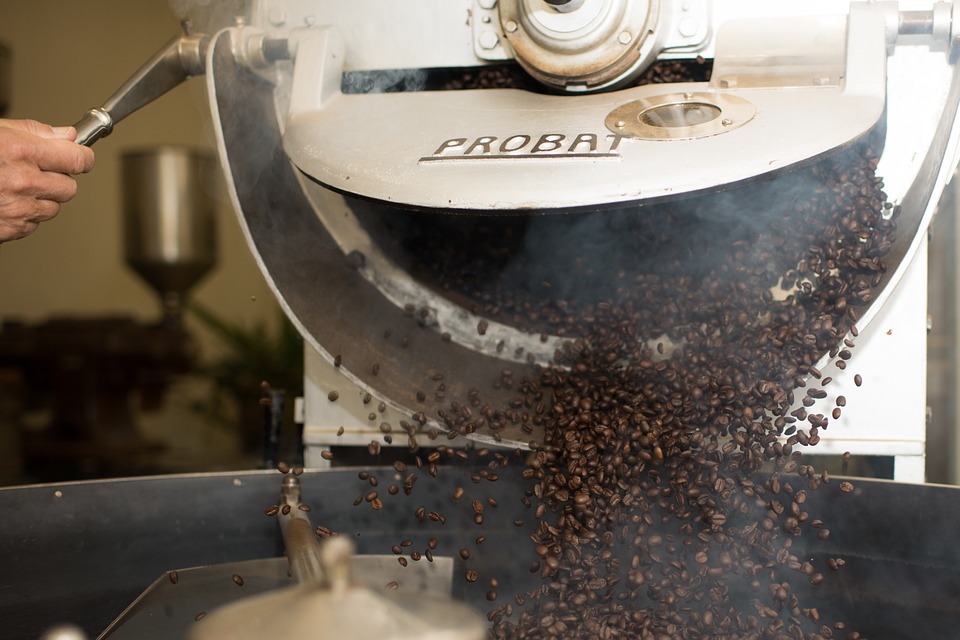
Professional coffee roasting | difference and difference between semi-hot air baking and direct fire roasting
Professional coffee knowledge exchange more coffee bean information please follow the coffee workshop (Wechat official account cafe_style) or declare first, this is my experience, not objective, because very few people can in the same structure, the same system, the core component of the bean roaster [roaster bucket] from half-hot air to straight bucket, and then compare, and then publish the experience. It is not

Types of roasters for roasting boutique coffee
Direct fire type, semi-direct fire type (semi-hot air type) and hot air type direct fire type: at present, it is recognized as the model that can most cause the original flavor of coffee among the roasting utensils. Its source of fire has direct contact with coffee beans, so it can produce a better flavor of coffee beans. However, its baking process has a great impact on the finished product, so the roaster must have a certain foundation, but this type of machine is also more capable of making.

Direct fire roaster coffee roaster knowledge Yangjia roaster coffee beans
The boiler surface of the direct fire baking machine has a perforated design. The holes have a certain size and spacing. The fire below will be directly transmitted to the furnace cabin. It requires a high level of skill on the part of the baker, and very careful adjustment of profit at each stage. Advantages: Short preheating time: Compared with hot air and semi-hot air baking machines, the furnace wall of the direct fire baking machine is thinner, so the boiler as a whole
Coffee bean roasting worker-household direct fire hand net baking (made in Japan)
Divided into two kinds of materials, both 18-8 stainless steel handles are natural logs, which can be baked 50 grams at a time and 100 grams at a time. The heating method is direct fire heating can use electric stove or natural gas direct fire baking method: firepower is medium fire, hold the hand net and shake it evenly on the fire. Slowly the beans will turn brown and begin to smoke. Almost 1
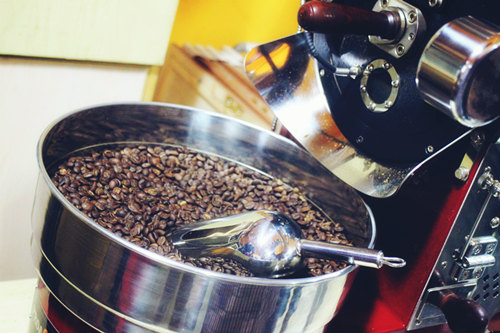
Coffee technology: introduction to the type classification and characteristics of coffee roasting degree
There are three common types of roaster, namely, hot air type, direct fire type, and semi-direct fire semi-hot air type. Next, I would like to introduce to you the characteristics of the three models. 1. Hot air type: a hot air roaster uses a blower to suck in air. After letting the air pass through a heating coil to raise its temperature, hot air is used as a heating source to bake coffee beans. Hot air can not only provide baking.
Pure coffee, made by direct fire.
In recent years, it has attracted much attention, and there is no better way of baking with both artistry and difficulty than to bake directly with fire, which fully releases the original aroma of coffee and has the wild flavor brought by fire.

How does the coffee roaster work? What are the types of coffee roasters? Direct fire, semi-direct fire, heat
Professional coffee knowledge exchange more coffee bean information please follow the coffee workshop (Wechat official account cafe_style) coffee roaster working principle? What are the types of coffee roasters? What's the difference between direct fire, semi-direct fire and hot air? One pot, two beans, three baking. In this sentence, the factors that affect roasting coffee are pointed out. Pot, which is used to bake coffee.

Coffee bean roasting knowledge what is roasting coffee by direct fire
General coffee roasting, for commercial reasons, uses hot gas as the main means of heating. some coffee companies that claim to add charcoal roast tend to produce oil because they are heated for a long time, and the aroma of the coffee will not protrude. Bingyue according to the baking method of boutique coffee, for the sake of customers, using off-fire roasting combined with secondary positioning method, plus
Common coffee beans roaster types and roaster brands introduced from home coffee roasters recommended
Professional coffee knowledge exchange More coffee bean information Please pay attention to coffee workshop (Weixin Official Accounts cafe_style) coffee bean roaster brand_coffee bean roaster price_coffee bean roaster shopping guide In the factors affecting the taste of a cup of coffee, raw beans account for 60%, roasting accounts for 30%, extraction accounts for 10%, good roasting can bring the personality of raw beans to the extreme and minimize defects

Principle of coffee roaster concentration and roasting coffee beans graphic degree
Coffee roaster principle concentrated roasting coffee beans graphic degree Italian coffee machine (Espresso Machine): coffee beverage is a highly unstable liquid that may change its characteristics and taste at once. This is the main reason why the espresso machine (Espresso Machine) was invented. The espresso machine can continuously extract several cups of coffee and brew the process.

The meaning of coffee bean roasting and the common types of coffee bean roaster
The so-called coffee roasting refers to the heating of raw beans to promote a series of physical and chemical reactions inside and outside of coffee beans, and in this process to produce a variety of sour, bitter, sweet and other flavors of coffee, forming mellowness and tone, and converting raw beans into dark brown beans. Among the factors that affect the taste of a cup of coffee, raw beans account for 60%, roasting accounts for 30%, and extraction accounts for 10%. Okay, baking can make

Introduction of coffee roaster
The roaster is mainly divided into four types: direct fire type, semi-hot air direct fire type, hot air type and electric type. 1. Direct fire is the earliest baking tool, that is, the raw beans are roasted by fire and then transferred to the drum. The built-in motor keeps running the drum and stirring the coffee beans in the drum, trying to make each coffee bean come into contact with the hot iron evenly to achieve the goal of balanced roasting.
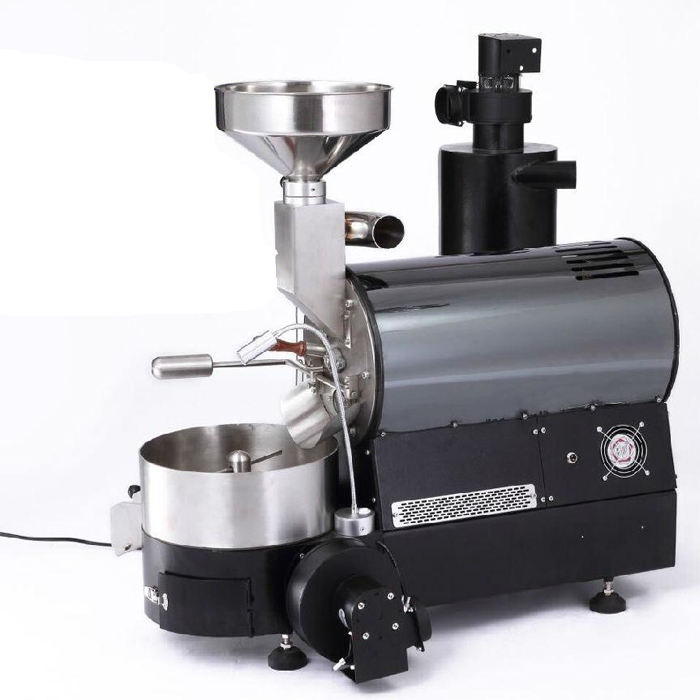
Coffee roaster: what are the specific categories of common coffee roasting machines?
1. Hot air coffee bean roaster the hot air roaster uses a blower to suck in air, then lets the air pass through a heating coil to raise its temperature, and uses hot air as a heating source to bake coffee beans. hot air can not only provide the temperature needed for baking, but also use the power of airflow to stir coffee beans, killing two birds with one stone. Advantages: high thermal efficiency, fast heating, heating ratio of raw beans
Coffee roaster three heating methods
1. Airflow type Simply put, airflow type bean dryer is like a hair dryer, sucking air with a fan, and then letting the air pass through a heating coil to raise its temperature, using hot air as a heating source to roast coffee beans, hot air can not only provide the temperature required for roasting, but also use the power of air flow to stir coffee beans, killing two birds with one stone. Advantages of Airflow

Introduction of coffee roasting knowledge introduction of coffee bean roasting methods introduction of roaster price
As early as the 13th century, the Arabs invented to put coffee beans in a pot, stir-fry them with fire, grind them into powder, and then brew coffee. The early Arabs liked to bake the beans shallowly and boil them with spices such as cardamom. Later, this coffee stir-frying method spread to Syria, Turkey and Egypt, where it was used to stir-fry the coffee black, then grind it into powder and add it.